Solar Inverters

A solar inverter turns DC power from solar panels or batteries into the AC power your home uses. Pick the inverter type first: a hybrid for grid-tied solar with battery backup, an off-grid inverter where there is no utility connection, or microinverters (one per panel) for grid-tied roofs with shade or several roof faces. Then match it to your battery voltage and your electrical service.

Read more about Solar Inverters

Need a brand or size we don't list, or a complete system list? Request a written quote.

14 products

String, microinverter, hybrid or off-grid: which type do you need?

  • Grid-tie string inverter: one inverter takes long series strings of panels and sends power to your home and the utility. It has no battery input, and a grid-tie-only system shuts down in a blackout for line-worker safety. We don't list string-only grid-tie inverters online right now; the grid-tie inverters page shows the hybrids and microinverters that also export to the grid, and we can quote string models on request.
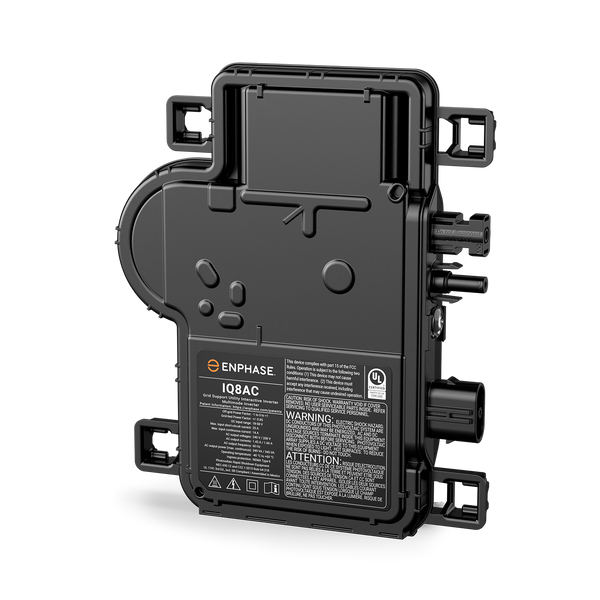
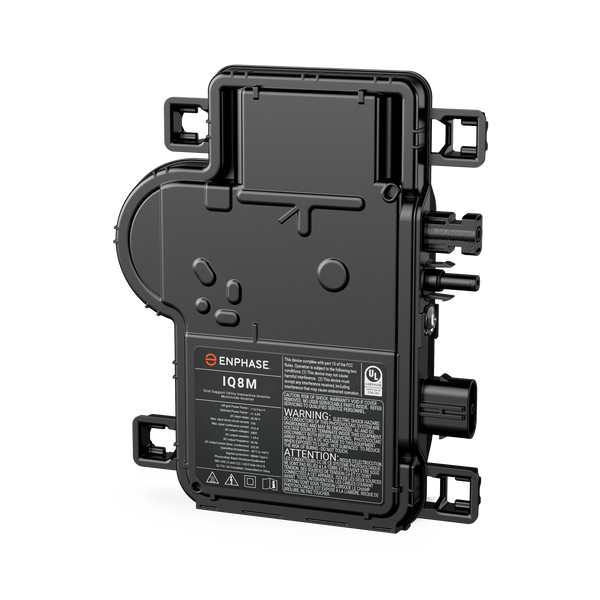
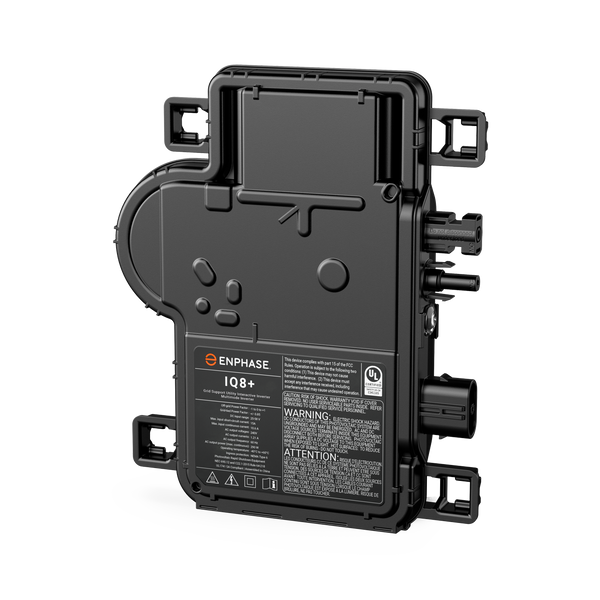
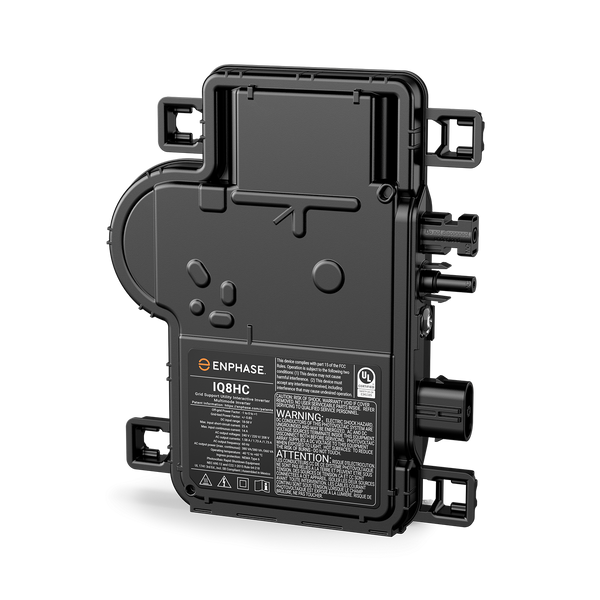
  • Microinverters: one small inverter under each panel, so shade or dirt on one panel doesn't drag down the rest, and you get panel-level monitoring. Good for roofs with several orientations. Microinverters have no battery input; backup on an Enphase IQ system needs an IQ System Controller, normally with IQ Batteries.
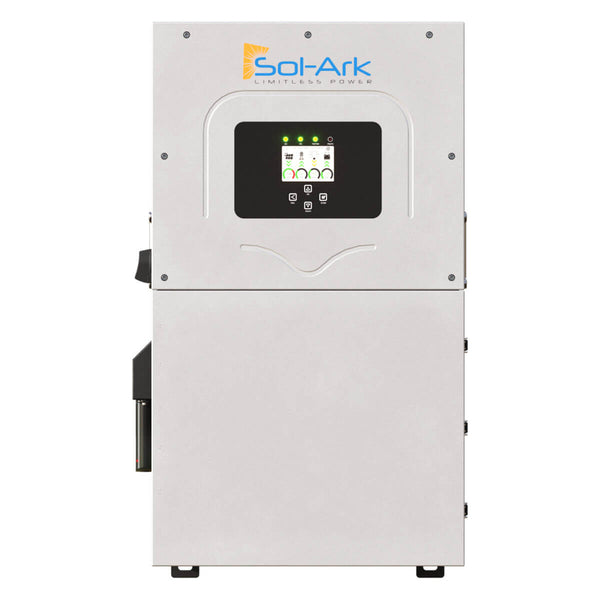
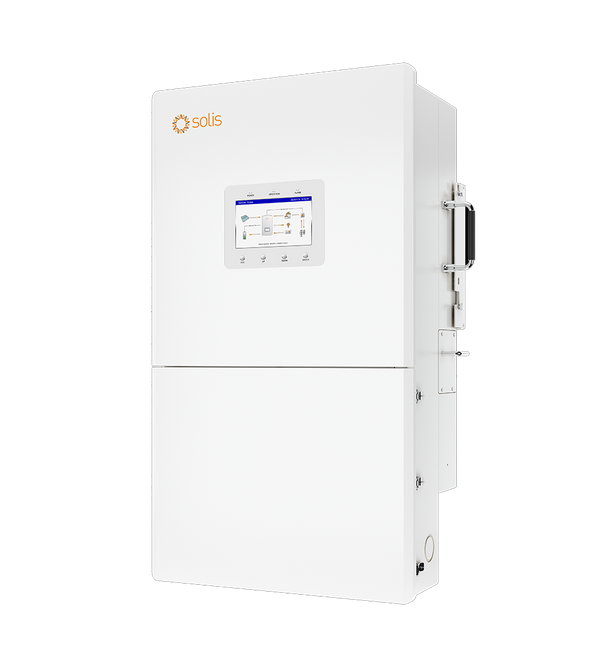
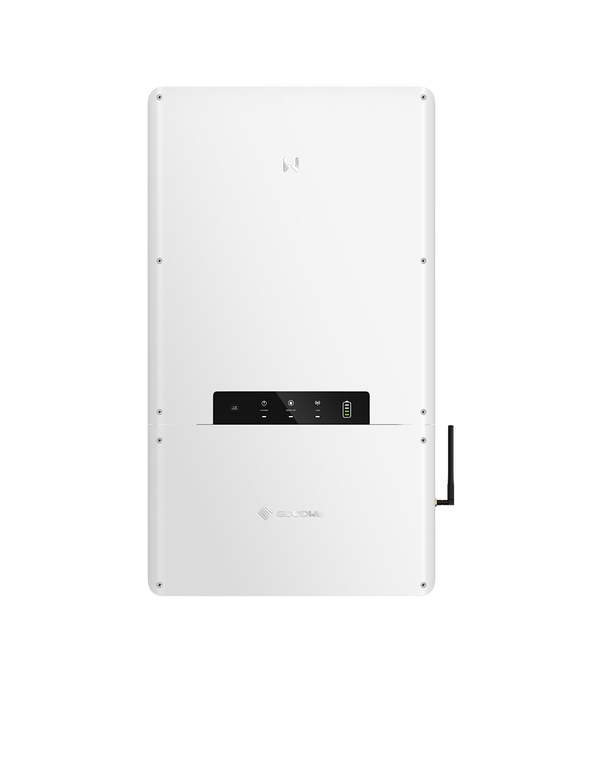
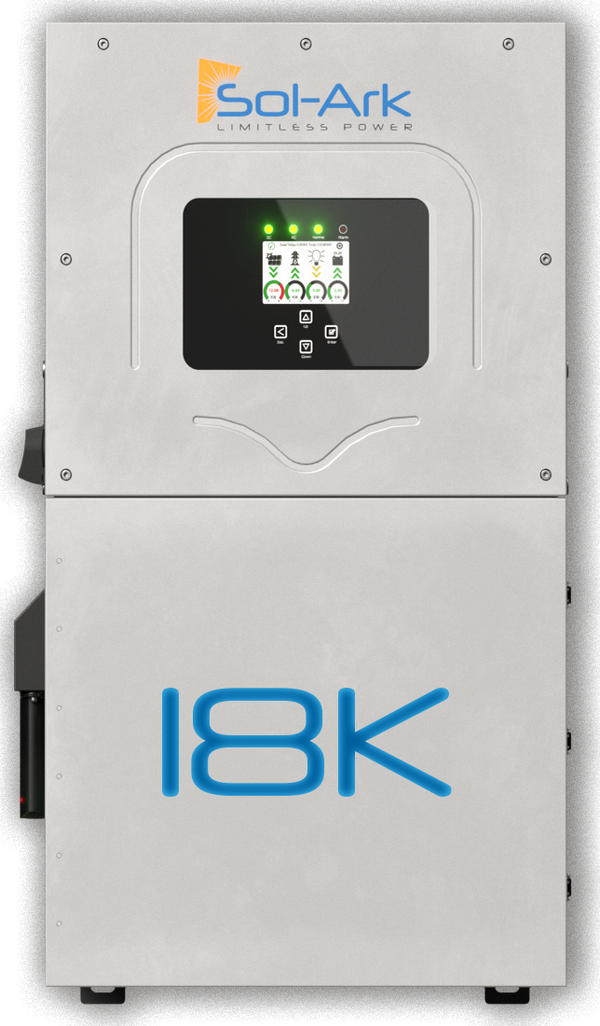
  • Hybrid inverters: grid connection, built-in solar charging, and a battery inverter/charger in one box. The usual choice for home backup, time-of-use savings, or a system that can also run off-grid. Most hybrids here use a 48V battery; the GoodWe ES-US uses a high-voltage battery.
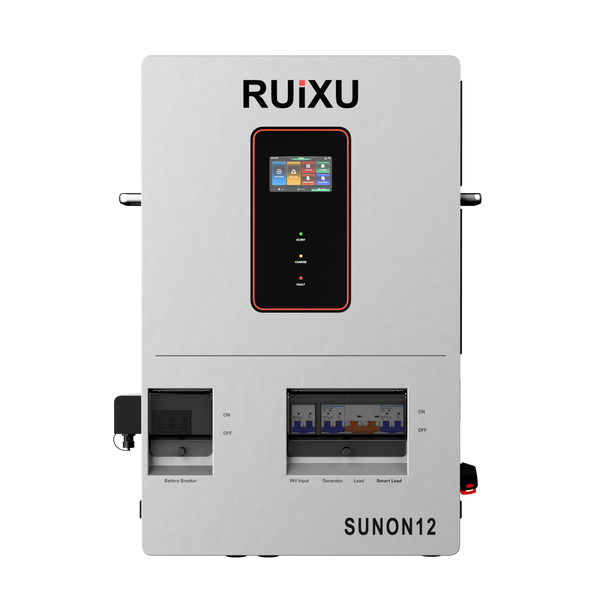
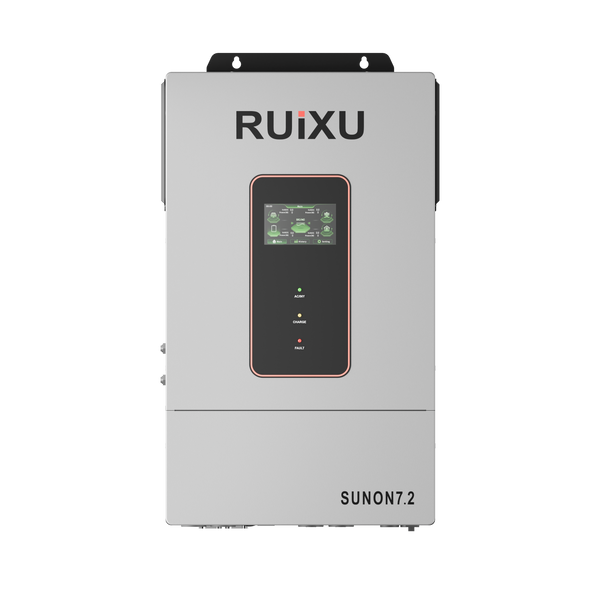
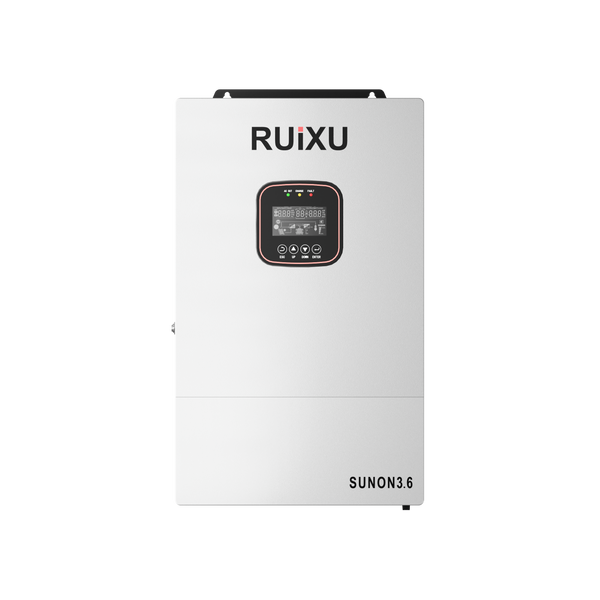
  • Off-grid inverters: make AC from a battery bank with no utility export, for cabins, shops, and remote homes. The RUiXU SUNON models combine the inverter, an MPPT solar charger, and a grid or generator battery charger; grid or generator power can charge the batteries and pass through to loads, but RUiXU does not describe them as grid-tie inverters that export to the utility.

Already have grid-tie solar and want to add batteries? See AC coupling.

Match battery voltage and compatibility

  • 48V (low-voltage) inverters: the Sol-Ark, Solis, and RUiXU SUNON models run on a 48V-class battery bank. The makers list battery operating ranges of about 40 to 63V depending on the model, so a 51.2V lithium battery fits that range and a 12V or 24V bank does not.
  • High-voltage inverters: the GoodWe ES-US accepts a battery from 80 to 495V (300V nominal), so a 48V battery does not fit. GoodWe lists its Lynx Home FH-US battery for the ES-US series; see lithium batteries.
  • Check the inverter maker's battery list. Lithium batteries usually talk to the inverter over a communication cable (CAN or RS485). Confirm your battery is on the inverter maker's compatibility list, or ask our team through the site before you buy.
  • Grow the bank the right way. Parallel only identical batteries the maker allows; see series and parallel battery connections and how to size a battery bank.

How to size a solar inverter

  1. Continuous output: add up the AC loads that could run at the same time. A 1,500W microwave, 100W of lighting, and a 500W refrigerator need at least 2,100W of continuous output, plus headroom.
  2. Surge: well pumps, compressors, and other motors draw several times their running watts at start-up. Compare that to the inverter's surge or motor-load rating on the product page.
  3. Solar input: for hybrids and off-grid inverters, keep each string's cold-weather open-circuit voltage under the inverter's maximum PV input voltage, and stay within its MPPT count, current per MPPT, and maximum PV power.
  4. Microinverters: size to the panel instead. Choose the IQ8 whose commonly used module range covers your panel's wattage, and keep within the maximum number of microinverters per 20A branch circuit on the product page.
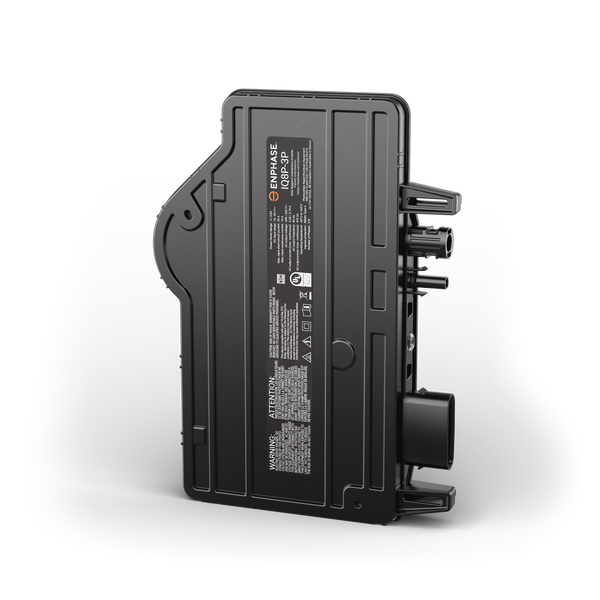
  5. Electrical service: most U.S. homes have 120/240V split-phase service. Small commercial buildings are often 120/208V three-phase, which needs a three-phase model such as the IQ8P-3P.

Start with the kWh calculator, the off-grid sizing calculator, or the grid-tied sizing calculator.

What else you need with your inverter

Solar inverter FAQ

What size inverter do I need?

For hybrid and off-grid systems, size to the AC loads that could run at the same time, plus surge headroom for motors, and match the inverter to your battery voltage. For microinverters, size to the panel: pick the IQ8 whose commonly used module range covers your panel's wattage. Each product page lists output, surge, and input limits.

Can I use a 48V battery with a high-voltage hybrid inverter?

No. A high-voltage hybrid such as the GoodWe ES-US accepts 80 to 495V, so a 48V bank is too low. Use a 48V hybrid such as the Sol-Ark or Solis models for a 48V battery, or pair the GoodWe with a high-voltage battery from GoodWe's compatibility list.

Does a hybrid inverter replace a charge controller?

Usually, for the array wired to it: these hybrids and off-grid inverters have built-in MPPT solar inputs. A separate charge controller is still used for an extra DC-coupled array or a design the inverter's inputs can't cover.

Will a solar inverter work during a blackout?

A grid-tie-only inverter shuts down when the grid goes down, even in full sun. Backup needs equipment that separates the home from the grid: a hybrid with a backup output and a battery (the GoodWe ES-US also needs GoodWe's Automatic Backup Device), or on an Enphase IQ8 system an IQ System Controller, normally with IQ Batteries. An off-grid inverter never depends on the grid.

Which Enphase IQ8 should I buy?

Match your panel's wattage and your service. Enphase lists commonly used module pairings of 235 to 440W for the IQ8+, 260 to 460W for the IQ8M, 295 to 500W for the IQ8AC, and 320 to 540W for the IQ8HC. The IQ8+ and IQ8M are for 240V split-phase; the IQ8AC and IQ8HC also connect to 208V single-phase. The IQ8P-3P (380 to 640W modules) is for 120/208V three-phase commercial service. Panels must also stay within the DC voltage and current limits on each product page.

Is an off-grid inverter the same as a hybrid?

Not quite. The RUiXU SUNON off-grid inverters can charge from the grid or a generator and pass that power through to your loads, but RUiXU does not describe them as grid-tie inverters that export solar to the utility. The Sol-Ark and Solis hybrids are grid-interactive and can also run off-grid. If you want to sell power back or offset your bill, choose a hybrid or microinverters.

Don't see the inverter you want?

We list the models above online. For other string, hybrid, or off-grid brands and sizes, request a written quote and we'll check availability.

Can altE help size an inverter?

Yes. Share your load list or peak AC watts, whether you need backup, your battery voltage, and your array size. Request a written quote or send a battery backup system quote request.