Enphase Energy
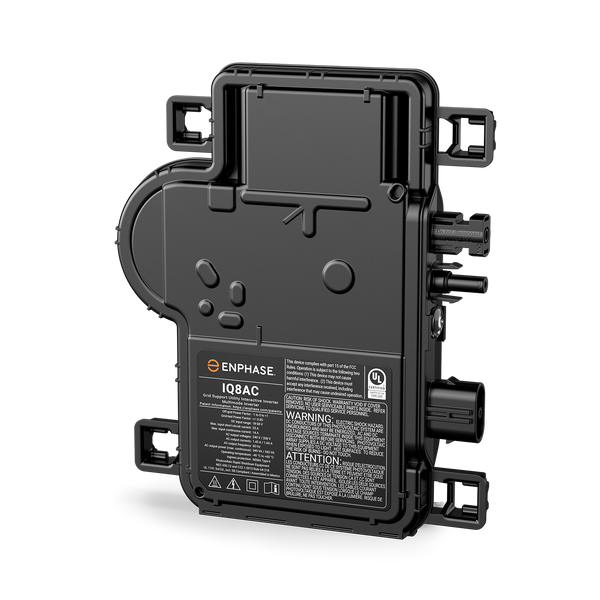
SKUIQ8AC-72-M-US
Enphase IQ8AC Microinverter, 240V/208V, 366VA Peak – IQ8AC-72-M-US
$227.44
Available to order
Shipping calculated at checkout
Equipment bundles
Solar, inverter and battery
Get one hour of personalized help with equipment selection, system questions, commissioning, or troubleshooting. Purchase your session, then use the scheduling link provided after checkout to choose an appointment.

The difference between hybrid, microinverter, and grid-tie for DIY solar: microinverters (this microinverters collection, Enphase IQ8) = panel-level AC for shade or complex roofs; hybrid = grid + battery backup in one unit; grid-tie = utility export without integrated backup.
When the storage fork is SimpliPHI vs Enphase 10C, Enphase 10C is typically AC-coupled LFP for the Enphase Energy System on this micro / IQ Gateway path, while SimpliPHI / PHI packs are typically DC-coupled on a 48V hybrid bus (not a drop-in for IQ8 alone). Compare lithium batteries by system type (DC-coupled and AC-coupled). altE lists Enphase IQ8 family micros (IQ8AC, IQ8M, IQ8+, IQ8HC, IQ8P-3P); pair with PV modules, Q cable, and IQ Gateway on Monitoring / Gateways. Shop Lithium, Solar Batteries, AC Coupling, and Hybrid Inverters.
Solar microinverters convert each module’s DC to AC at the panel, so shade or a weak module does not drag down the whole string. Shoppers land here for Enphase IQ8 panel-level AC — then pair micros with solar panels, Q trunk cables, and IQ Gateway / monitoring.
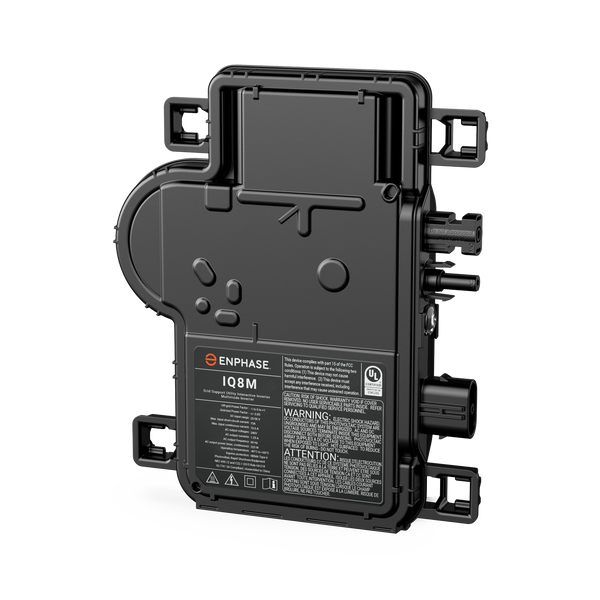
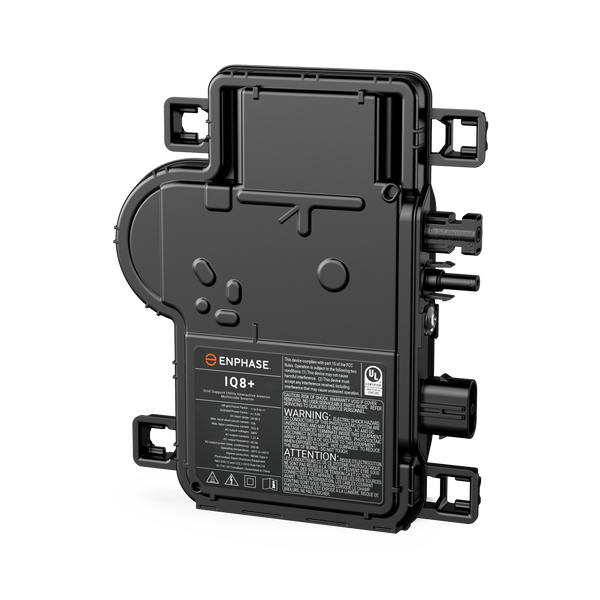
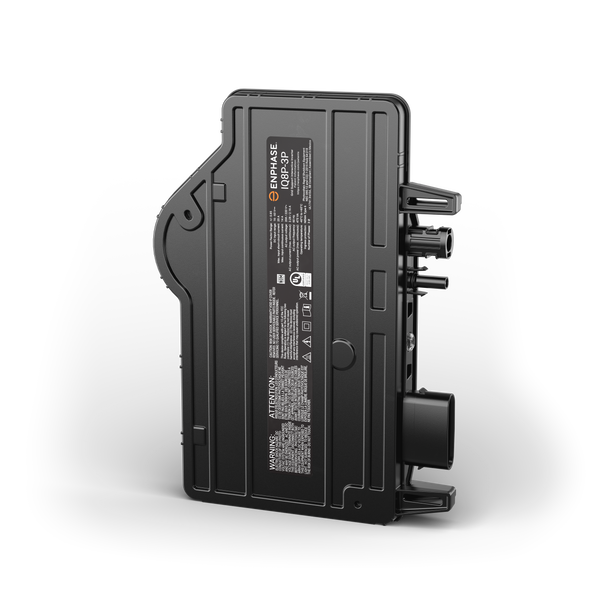
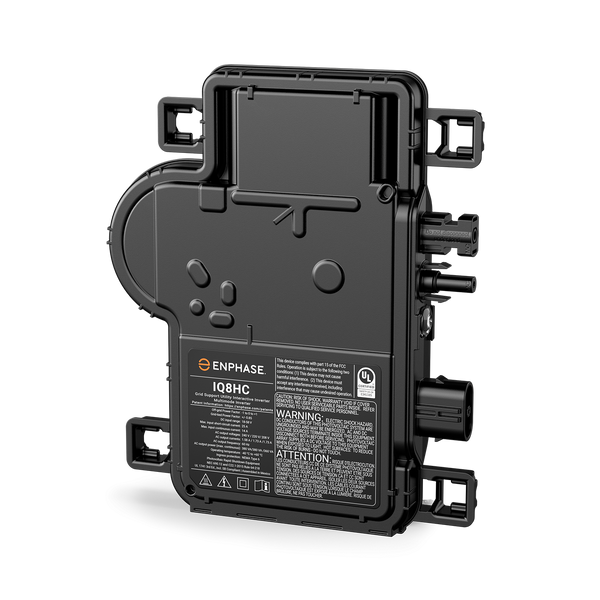
Listed on this page (Enphase IQ8): IQ8AC-72-M-US, IQ8M, IQ8+, IQ8HC, and IQ8P-3P (208V three-phase). Match continuous/peak output and 60- vs 72-cell modules to the part.
Micros usually beat a central string or hybrid inverter when roofs have shade, multiple planes or orientations, or when you want module-level monitoring and easier expansion one panel at a time. For whole-home battery backup in one box, compare the hybrid inverter path (for example Solis) as well.
The difference between hybrid, microinverter, and grid-tie: microinverters (this page) convert DC to AC at each module — best for shade, multi-plane roofs, and panel-level monitoring; hybrid puts grid + battery backup in one platform; grid-tie / string exports without integrated storage. See the main solar inverters category for the full comparison.
Enphase IQ microinverters are designed to meet NEC 690.12 rapid shutdown at the module, so a micro-only array usually does not need add-on devices. If the roof also has a string or hybrid inverter array, see our rapid shutdown devices for Tigo, APsmart, and Tesla systems.
Choosing SimpliPHI vs Enphase 10C with micros? Enphase 10C is the typical AC-coupled LFP path with IQ8 micros and the IQ Combiner 6C (gateway built in); SimpliPHI is the typical DC-coupled LiFePO4 path on Solis / other 48V hybrids. Compare lithium batteries by system type (DC-coupled and AC-coupled), then shop Lithium, Solar Batteries, or AC Coupling.
The difference between hybrid, microinverter, and grid-tie for DIY solar is architecture: hybrid = grid + battery backup in one platform (often a 48V hybrid); microinverters = panel-level AC for shade or complex roofs; grid-tie = utility export without integrated battery backup. Compare all three on hybrid inverters, microinverters, grid-tie inverters, and the main solar inverters category.
Microinverters convert DC to AC at each panel (Enphase IQ8) — best for shade, complex roofs, and module-level monitoring. String inverters convert a whole string at a central box — simpler when the roof is clean and single-plane. Hybrid inverters combine grid-tie with battery charging/backup in one platform. Many homes can use either a micro or hybrid path.
Match continuous/peak AC rating and module cell count (60 vs 72) to the IQ8 part: IQ8AC, IQ8M, IQ8+, IQ8HC (240V), or IQ8P-3P (208V three-phase). Pair each micro with the correct Q trunk spacing and an IQ Gateway.
Yes for a typical Enphase IQ8 install: Q trunk cables daisy-chain the micros under the array, and an IQ Gateway (see monitoring & control / gateways) commissions the system and reports production. Terminators and seals finish unused drops. Browse cable & wiring for Q trunks.
Because each micro manages its own module, shade, dirt, or snow on one panel mainly affects that panel — not the entire string the way a single-MPPT string inverter can. Micros do not create free energy under total shade, but they protect the rest of the array’s output and make multi-plane roofs far more forgiving.
Panel-level IQ8 micros produce grid-interactive AC; whole-home or critical-load backup needs added Enphase backup hardware and storage (on current Enphase Energy System designs, IQ Battery 10C with IQ Combiner 6C and IQ Meter Collar), not the micro alone. Request a written quote for a micro + storage bill of materials, or compare a hybrid inverter path.
Enphase 10C is typically AC-coupled LFP and follows this microinverter / IQ Gateway path (not a classic 48V DC hybrid bank). SimpliPHI / PHI packs are typically DC-coupled on a 48V hybrid bus instead. Compare lithium batteries by system type (DC-coupled and AC-coupled). Shop Lithium and Solar Batteries.
Yes. Share your module model (or wattage and cell count), roof planes, and whether you need monitoring or backup. Book a Technical Support Call — $99.00 for one hour of personalized help.
Questions about Enphase IQ8 micros, Q cables, or IQ Gateway monitoring? Book a Technical Support Call — $99.00 for one hour of personalized help. altE has served DIY and pro installers since 1999.
Solar microinverters attach to each module for panel-level AC conversion, better shade tolerance, and module-level monitoring versus a central string inverter.
Need help choosing microinverters?
An inverter is an essential component of any solar energy system, converting direct current (DC) electricity from the solar panels into alternating current (AC) electricity used for your home's appliances. Traditionally, solar systems have utilized a single centralized "string" inverter. However, micro inverters now offer an extremely appealing alternative.
Typically, a solar micro inverter will be connected to each module (panel). Each micro inverter works independently of the others in the system, maximizing efficiency.
There is a single point of failure in a system with a traditional central string inverter. This means that even a simple issue with the inverter will halt solar production completely, potentially causing a loss of power. In contrast, placing one micro inverter per module provides a highly reliable power optimizer and source of solar output. If one of the micro inverters fails, the rest continue to operate.
In addition, using micro inverters can be an intelligent way to avoid reduced production due to sunlight obstructions. From cloudy days and snow to dirt and debris, obstructions on your solar panels can be expected from time to time. However, micro inverters allow each solar panel to operate independently (versus limiting the production to the weakest solar module like a central string inverter would).
Finally, micro inverters offer an individual solar panel performance monitoring capability you might not have even considered. You'll gain the ability to compare the performance of each panel versus only having access to the performance of the system as a whole. This can be a significant benefit when it comes time to service equipment because you can rapidly pinpoint a single panel's (or micro inverter's) failure without diagnosing the entire system.
Micro inverters can be utilized with virtually any setup, though there are specific scenarios in which this option is most beneficial. You may want to consider solar micro inverters vs. a centralized string inverter if:
As you browse micro inverters, a few key characteristics can help you narrow down your options:
String Inverters, DC Optimizers & Micro Inverters | Comparison & Overview of 3 Grid Tie Inverters
In this video we outline the difference between three types of grid-tie inverters: A micro inverter by Enphase, a string inverter by Fronius and a string inverter with DC optimizers by SolarEdge. Watch to find out which is the right one for you!