

Solis
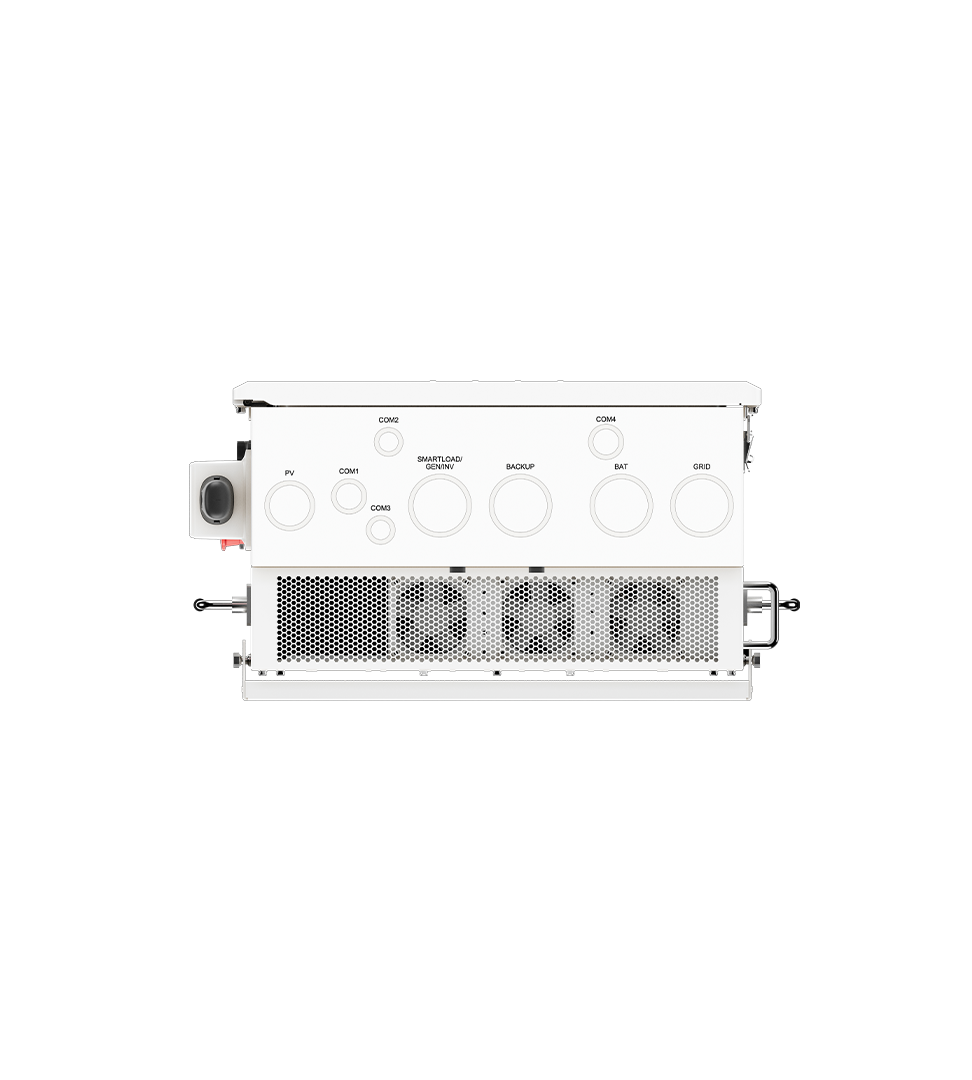
Solis S6 16kW 48V Hybrid Inverter, 120/240V Split-Phase – S6-EH2P16K03-SV-YD-L-US
Solis S6 16kW 48V Hybrid Inverter, 120/240V Split-Phase – S6-EH2P16K03-SV-YD-L-US
Couldn't load pickup availability
Product Overview
The Solis S6-EH2P16K03-SV-YD-L-US is a 16 kW, 48 V low-voltage hybrid inverter for homes on 120/240 V split-phase service. It combines solar charging (three MPPTs), a 48 V battery inverter/charger, grid connection, a 200 A passthrough for whole-home backup and a smart port for a generator or AC-coupled solar.
Solis describes it as able to run on-grid, off-grid or as a microgrid. The battery is a 48 V-class bank (40–60 V), not a high-voltage battery, and backup can cover dedicated loads or the whole home.
Solis sells this inverter with or without a built-in rapid shutdown transmitter. Solis's user manual (Version 2.7, March 5, 2026) lists the part number without a suffix (this listing) as the version with no transmitter; -APST (APsmart) and -RSS (Tigo) are the built-in options. Solis's 2026 Master Product Compatibility Sheet (June 8, 2026) confirms that a suffix is needed for an integrated transmitter. Without a built-in transmitter, a compatible external transmitter is installed instead.
Best For
- Larger homes on 120/240 V split-phase service: 16 kW rated output, with backup output at the same rating.
- Whole-home backup with a 48 V battery: The 200 A continuous passthrough lets the inverter sit between the utility and the loads.
- Generator backup: The smart port accepts a generator up to 24 kW and 100 A, per Solis's datasheet.
- Projects that will use an external rapid shutdown transmitter: Solis's manual describes installing an external Tigo or APsmart transmitter with this inverter.
Key Features & Specifications
| Specification | Details |
|---|---|
| Product type | 48 V low-voltage hybrid inverter (on-grid, off-grid and microgrid operation), split-phase |
| Model / ordering part number | S6-EH2P16K03-SV-YD-L-US |
| Rated output (grid and backup) | 16 kW / 16 kVA; 240 V L1-L2 (120/240 V split-phase); 66.7 A |
| Backup surge | 3× rated power for 1 s; 2× rated power for 10 s |
| Backup switch time | Less than 10 ms |
| Grid passthrough | 200 A maximum continuous |
| Grid input voltage range; frequency | 211–264 V; 58.8–61.2 Hz |
| PV input | 3 MPPTs, 2 strings each; recommended maximum PV power 25.6 kW |
| MPPT range; start-up voltage; maximum DC input | 100–450 V (full load 186–450 V); 100 V; 550 V |
| Current per MPPT | 40 A maximum input; 50 A maximum short-circuit |
| Battery | Li-ion or lead-acid; 40–60 V; 290 A maximum charge/discharge; CAN and RS485 communication |
| Generator input | 24 kW maximum; 100 A |
| Efficiency | Maximum 96.02%; CEC 95.45% |
| Protection | Ground fault monitoring, integrated AFCI, PV reverse-polarity protection |
| Enclosure; temperature | Type 4X; −25°C to 60°C (−13°F to 140°F) |
| Dimensions; weight | 534 × 930 × 297 mm (21.02 × 36.61 × 11.69 in); 65.8 kg (145.06 lb) |
| Monitoring | SolisCloud; 7.0 in LCD, Bluetooth and app; RS485, with optional cellular, Wi-Fi or LAN |
| Certifications (per Solis) | UL 1741, UL 1741 SB, UL 1741 PVRSS, UL 1699B, UL 1998, CSA C22.2 107.1; IEEE 1547-2018, IEEE 1547.1-2020, CA Rule 21 |
| Source | Solis S6-EH2P(9.6-16)K03-SV-YD-L-US datasheet V2.2 (PDF dated March 16, 2026); Solis's user manual (Version 2.7, March 5, 2026); Solis's 2026 Master Product Compatibility Sheet (June 8, 2026) |
What You May Also Need
Usually required
- A rapid shutdown transmitter and matching receivers (rooftop arrays): Solis's manual lists this part number as the version with no built-in transmitter. For the S6-EH2P, Solis's 2026 Master Product Compatibility Sheet (June 8, 2026) lists Tigo TS4-A-F or TS4-A-2F receivers (Tigo RSS transmitter) and APsmart RSD-S-PLC-A or RSD-D-20 receivers (APsmart transmitter); it lists the Tigo CCA with the TS4-A-O optimizer as compatible but not integrated. Brands cannot be mixed, and Solis warns that installing components not on its list can void the inverter warranty. Examples: the Tigo RSS transmitter kit with Tigo TS4-A-F receivers, or the APsmart Transmitter PLC kit with APsmart RSD-S-PLC-A or RSD-D-20 receivers per Solis's June 2026 compatibility sheet.
- A 48 V battery bank: Solis publishes a list of closed-loop (CAN) batteries for this inverter; check the current list for the battery model and quantity. Solis's user manual (Version 2.7, March 5, 2026) also allows a 48–52 V lithium or lead-acid battery in open-loop mode. In that mode the inverter cannot read battery state of charge or faults, so confirm the battery warranty covers open-loop use.
- Battery cables and DC overcurrent protection: Size them for up to 290 A, following Solis's and the battery maker's manuals.
May be required
- Current transformers (CTs) or an energy meter: Solis's user manual (Version 2.7, March 5, 2026) says self-use mode works only with CTs or a meter installed. Two 250 A split-core CTs (CHINT NCTK-24) come with the inverter, per that manual and Solis's June 2026 compatibility sheet. The manual also calls for a CHINT energy meter in some layouts, for example when more than one inverter is installed; check the manual's meter conditions for your site.
- Disconnects and breakers: Additional AC disconnects or breakers may be needed depending on whether you back up the whole home or selected loads.
- A backup loads panel: Needed when you back up dedicated loads rather than the whole home.
Optional upgrades
- Generator: Connects to the smart port (24 kW, 100 A maximum per Solis). Solis's manual also covers generator dry-contact control.
- Cellular, Wi-Fi or LAN module: Optional communication for SolisCloud monitoring.
Check current manufacturer documentation before combining components, especially batteries, inverters, communications equipment and system-control hardware.
Important Considerations
- No built-in transmitter. Solis's manual and its June 2026 compatibility sheet both say an integrated transmitter is ordered with a suffix (-APST or -RSS), so this no-suffix part number has none, even though the series datasheet lists an integrated transmitter. Check the unit label before ordering rapid shutdown equipment.
- 48 V battery, not high-voltage. This inverter takes a 40–60 V battery. High-voltage battery systems are not compatible with it.
- 120/240 V split-phase only. The datasheet lists 240 V L1-L2 output with a 211–264 V grid range. It is not a 208 V three-phase inverter.
- Size and weight. At 145 lb, the inverter needs a wall and mounting method that can carry it.
- Professional installation. Grid-connected hybrid systems need utility interconnection approval and are installed by qualified installers under local electrical codes.
Share