
Plug-in solar

Plug-In Solar: Understand Your Options

Plug-in solar uses a small solar array and purpose-built equipment to supply electricity through a permitted connection to your home's electrical system. It can offset part of your daytime electricity use. Before choosing a system, check your state's rules, the equipment's certification, and the installation requirements for your property.

Questions about your site or equipment? Book a Technical Support Call — $99.00

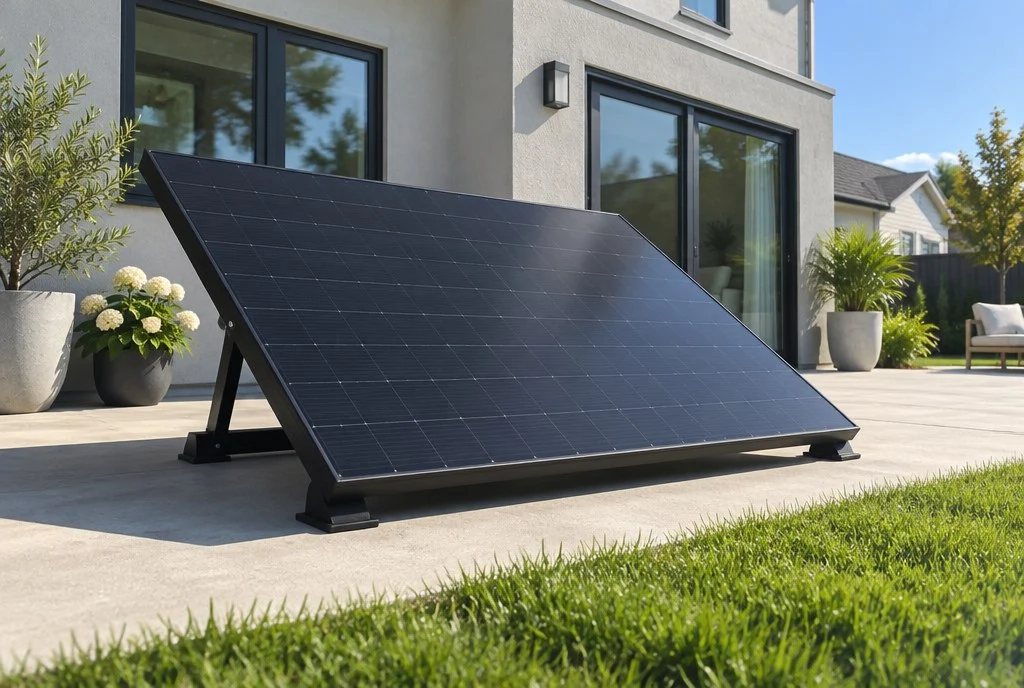
Solar panels mounted beside a house

What plug-in solar is

A plug-in solar system is a small solar setup, usually one to four panels with a built-in or attached microinverter, that is certified as a complete system to connect to your home through a receptacle. The power it produces is used by whatever is running in your home at that moment, which reduces the electricity you draw from the grid.

It is not a set of separate parts. Do not connect separately purchased panels and an inverter to an outlet. A certified plug-in system is evaluated as a whole, including its cord and plug, its inverter controls, and its installation instructions. A panel or an inverter that is certified on its own does not make the assembled combination approved for plugging in.

How it differs from other options

  • Rooftop solar is larger and permanently wired. It is installed with permits and inspections and connected under an interconnection agreement with your utility. It can cover much more of your electricity use and may qualify for net metering where your utility offers it.
  • Portable power stations are batteries with their own outlets. Many can be charged from solar panels, but they power only the devices plugged into them and do not supply your home's wiring.
  • Backup power systems use batteries or a generator with a transfer switch or interlock to keep selected circuits running during an outage. A plug-in solar system is not a backup system. It stops supplying power when the grid goes down.

Where it can go, and what renters should check

Plug-in panels need a spot with as much direct sun as possible and little shade, such as a balcony railing, patio, yard, or wall. South-facing locations generally produce the most. Panels must be mounted securely enough for wind, and a balcony or railing must be able to carry the load.

The system's cord should reach the outlet the manufacturer's instructions specify. Do not use extension cords, power strips, or adapters unless the instructions specifically allow them.

If you rent, get your landlord's permission in writing before you install. Vermont requires tenants to give at least 10 days' notice, and New Jersey's law (from March 1, 2027) requires 14 days' written notice. Landlords in those states may set reasonable restrictions. Condominium and homeowners' association rules can apply too. Colorado (from January 1, 2027) and New Jersey (from March 1, 2027) limit associations' ability to prohibit qualifying devices.

Production and savings: an example with assumptions

Production depends on your location, the direction and tilt of the panels, shade, and temperature. A common rough estimate is:

Annual production (kWh) ≈ panel rating (kW) × peak sun hours per day × 365 × a loss factor

Example, using stated assumptions rather than a measured result:

  • Panels rated 800 W in total (0.8 kW), facing south at a good tilt, with no shade
  • 4.5 peak sun hours per day, a mid-range figure for much of the United States
  • A loss factor of 0.8 for heat, wiring, inverter, and dirt

0.8 × 4.5 × 365 × 0.8 ≈ 1,050 kWh a year, more in summer and less in winter. At an example electricity rate of $0.18 per kWh, that is about $190 a year, but only if your home uses all of that power at the moment it is produced. Use the rate on your own bill.

Panels hung vertically on a railing, partly shaded, or facing east, west, or north can produce substantially less. Power your home is not using at that moment flows to the grid. Several state laws keep plug-in devices outside net metering or do not pay for exported power, so plan around the power you use. For an estimate for your address and orientation, try NREL's PVWatts calculator.

Certification, circuits, and instructions

Look for certification of the complete plug-in system, not just its parts. UL Solutions publishes UL 3700, the Outline of Investigation for Interactive Plug-In PV Equipment and Systems, which sets requirements for construction, performance, connectors, ground-fault and overcurrent protection, and features that promote safe installation. Some state laws name UL 3700 or a comparable standard. Ask the seller for the certification and check that it covers the system you are buying.

Circuits matter because household branch circuits are designed for power to flow one way, from your electrical panel to your outlets. UL Solutions explains that when a plug-in system feeds power into a circuit, the current from the utility and from the solar system together can exceed the wiring's rating without tripping the breaker. It also points to plug blades that can be energized when panels are in sunlight, and to ground-fault (GFCI) protection designed for one-way current. Mitigations it describes include dedicated circuits with unique receptacles and built-in overcurrent and ground-fault protection.

  • Follow the manufacturer's instructions for which outlet and circuit to use.
  • Do not use a circuit that already carries heavy loads, such as space heaters or kitchen appliances, unless the instructions allow it.
  • Some states require a dedicated circuit or a licensed electrician above a set size. Maine, for example, requires both for systems over 420 W.
  • Any change to your wiring or electrical panel calls for a licensed electrician and may need a permit.

What happens during a power outage

Plug-in solar systems are designed to stop supplying power when the grid goes down, and most of the state laws below require it. That protects utility crews working on the lines and people handling the plug, but it means the system will not keep your lights or appliances running during an outage.

Some products pair panels with a battery that can run devices plugged directly into it during an outage. That is a separate function, so check the product's certification and instructions for how it works. Never connect a generator or any other power source to your home's wiring through an outlet.

State requirements

The rules differ by state, and several laws take effect on future dates. The State Requirements guide below separates laws in effect from signed laws that start later, lists the size limits and conditions for each, and links to the official sources. If your state is not listed, the guide explains what still applies.

Frequently asked questions

Do I need an electrician?

It depends on your state and your system. Maine requires a licensed electrician and a dedicated circuit for systems over 420 W. Anywhere, an electrician can confirm that the circuit you plan to use is suitable, and any change to your wiring or panel calls for one.

Do I have to tell my utility?

Several states require it. Maryland requires notice before installation. Maine requires notice within 30 days for systems over 420 W. Virginia (from January 1, 2027) requires notice on the State Corporation Commission's form before installation, and California utilities may require online registration (from January 1, 2027). Utilities in Colorado, and in New Hampshire from January 1, 2027, may ask you to report the system. If your state is not listed, ask your utility before you install.

Will my meter work with plug-in solar?

Some meters do not handle power flowing back to the grid the way you might expect. Vermont allows plug-in systems only where a smart meter is installed. Connecticut's law requires a warning that generation above what your home is using at that moment is charged to you as usage unless your meter allows for net metering. Ask your utility about your meter before you install.

Will I be paid for power I send to the grid?

Usually not. Utah keeps plug-in devices outside net metering, and Vermont does not compensate exported power. Virginia's law (from January 1, 2027) requires devices that do not export to the grid. Size the system so that your home uses most of its output as it is produced.

Can I add a battery?

Some plug-in products include a battery or are designed to work with one. Use only a battery that is part of the certified system or that the manufacturer approves for it, and follow its instructions. Your state's output limit still applies.

I rent. Can I use plug-in solar?

Get your landlord's written permission first. Vermont requires 10 days' notice, and New Jersey (from March 1, 2027) requires 14 days' written notice; landlords there may set reasonable restrictions. Check your lease and any association rules as well.

What size system can I use?

Most state laws listed below cap output at 1,200 W, and Colorado's cap is 1,920 W. Some states add requirements at lower sizes: 420 W in Maine, and 391 W for certain listing rules in Maryland, Virginia, and Colorado. Choosing a size close to what your home uses during the day usually gets the most value from the system.

State Requirements

Last reviewed: October 12, 2026

Several states have passed laws for plug-in solar. Permission depends on using qualifying equipment and meeting the installation requirements for that state; a law does not make every product or installation compliant. Laws that are signed but not yet in effect are listed separately. Check the official source before you buy or install.

Frameworks in effect

  • Utah

    In effect
    In effect since
    May 7, 2025
    Output limit
    1,200 W Maximum power output of the device
    Important conditions

    Plugs into a standard 120-volt outlet. Must meet the current National Electrical Code, be certified by UL or another nationally recognized testing laboratory, and stop powering the building's wiring during an outage.

    Your utility cannot require approval, an interconnection agreement, fees or extra equipment. Plug-in devices are not part of net metering.

    Reviewed
    October 12, 2026
  • Maine

    In effect
    In effect since
    July 29, 2026
    Output limit
    1,200 W Combined inverter output per service address
    Important conditions

    Above 420 W, the system must be installed by a Maine-licensed electrician on a dedicated circuit with a single receptacle outlet, and you must notify your utility on the Public Utilities Commission's form within 30 days of installation.

    Equipment must be listed to UL 3700 or a comparable standard from a nationally recognized testing laboratory, or be configured to the National Electrical Code.

    Reviewed
    October 12, 2026
  • Maryland

    In effect
    In effect since
    May 12, 2026
    Output limit
    1,200 W Maximum device output; one device per electric meter, residential use
    Important conditions

    Notify your electric company before installation and give it a certification describing the device's safety features and maximum generating capacity. The device must be certified by a nationally recognized testing laboratory such as UL.

    A separate exemption applies to devices of 391 W or less: they are exempt from product-listing provisions that would require changes to the building's wiring or electrical panel. If your device needs an automatic locking disconnect switch, you pay for its installation.

    Reviewed
    October 12, 2026
  • Vermont

    In effect
    In effect since
    July 1, 2026
    Output limit
    1,200 W Combined inverter capacity per electric meter
    Important conditions

    Allowed only where a smart meter is installed. You cannot add a plug-in device where a net-metering system is installed, and exported power is not compensated.

    Devices must comply with UL 3700 or an equivalent certification, be installed and operated in line with IEEE 1547-2018, and stop energizing the building during an outage. Tenants must give the landlord at least 10 days' notice; the landlord may respond within 10 days with reasonable restrictions.

    Official source
    Act 149 of 2026, as enacted
    Reviewed
    October 12, 2026
  • Connecticut

    In effect
    In effect since
    October 1, 2026
    Output limit
    1,200 W Maximum power output; one device per electric meter
    Important conditions

    Plugs into a standard 120-volt outlet behind your meter. Must meet the State Building Code, the National Electrical Code and IEEE 1547, be certified by UL or another nationally recognized testing laboratory and meet UL 1741, and stop energizing the building during an outage. Building, fire and local codes still apply.

    The law requires this warning: generation that is more than your home is using at that moment is charged to you as usage unless your meter allows for net metering. Ask your utility about your meter before you install.

    Reviewed
    October 12, 2026
  • Colorado

    In effect
    In effect since
    August 2026, 90 days after the session ended (core provisions)
    Output limit
    1,920 W Maximum output; one system per address and one device per wall outlet
    Important conditions

    Must be labeled and listed by a nationally recognized testing laboratory, stop energizing the grid during an outage, and follow fire codes and local building safety codes. Your utility cannot require approval, fees or extra equipment, but it may ask you to tell it about the device and its size.

    From January 1, 2027, property owners and associations cannot unreasonably prohibit these devices (reasonable restrictions are allowed), and devices over 391 W may not be sold, leased or rented unless they are UL labeled and listed.

    Official source
    HB 26-1007, signed
    Reviewed
    October 12, 2026

Signed laws with future start dates

  • New Hampshire

    Signed, not yet in effect
    Starts
    January 1, 2027
    Output limit
    1,200 W AC Maximum inverter output; one system per metered customer
    Important conditions

    Must be certified by a nationally recognized testing laboratory to recognized safety standards. Utilities cannot require approval, interconnection review or fees, but may ask you to report the system's wattage.

    A separate building-code provision takes effect only after the state energy commissioner certifies that a national standard exists for safely connecting these systems. Until these provisions start, the new exemption is not available.

    Reviewed
    October 12, 2026
  • Virginia

    Signed, not yet in effect
    Starts
    January 1, 2027
    Output limit
    1,200 W Per customer, or per residential unit in multifamily housing
    Important conditions

    Before installing, notify your utility on the State Corporation Commission's form; the utility has 15 days to respond. The device must meet the National Electrical Code, be certified by a nationally recognized testing laboratory, stop affecting the building during an outage and must not export power to the grid. Devices of 391 W or less are exempt from listing provisions that would require changes to wiring or panels. Not covered by net metering.

    Reviewed
    October 12, 2026
  • New Jersey

    Signed, not yet in effect
    Starts
    March 1, 2027
    Output limit
    1,200 W Combined output of all devices
    Important conditions

    Signed September 1, 2026; takes effect six months after signing. Devices must be listed or certified to UL 3700 or a comparable standard, plug into a standard 120-volt outlet and stop exporting power during an outage. No interconnection agreement, utility approval or fee is required.

    Tenants must give written notice at least 14 days before use, and landlords may set reasonable restrictions. Associations and municipalities cannot prohibit qualifying devices.

    Reviewed
    October 12, 2026
  • California

    Signed, not yet in effect
    Starts
    January 1, 2027
    Output limit
    1,200 W Maximum aggregated AC output per dwelling
    Important conditions

    Signed September 30, 2026 (Chapter 985); starts January 1, 2027 under the state's standard effective-date rule. The complete device must be certified as a plug-in photovoltaic system by UL or another nationally recognized testing laboratory, meet the National and California Electrical Codes, and include a certified feature that stops backfeed during an outage.

    Utilities cannot require approval or fees, but may require online registration of the address, make, model and size. From January 1, 2030, plug-in devices that do not meet these conditions may not be sold in California.

    Reviewed
    October 12, 2026

Other states

If your state is not listed, there may be no dedicated plug-in solar law yet. That does not mean plug-in systems are banned, and it does not mean they are allowed without conditions. Your utility's interconnection rules, local building and electrical codes, and your lease or association rules still apply. Confirm with your utility and your local building department before installing.

Whether a state allows plug-in solar and whether altE sells a compliant product are separate questions. We list plug-in equipment only when we have verified products to offer.

Want help checking a plug-in plan?

Get one hour of personalized help with equipment selection, system questions, commissioning, or troubleshooting. Purchase your session, then use the scheduling link provided after checkout to choose an appointment.

Book a Technical Support Call — $99.00