Sol-Ark
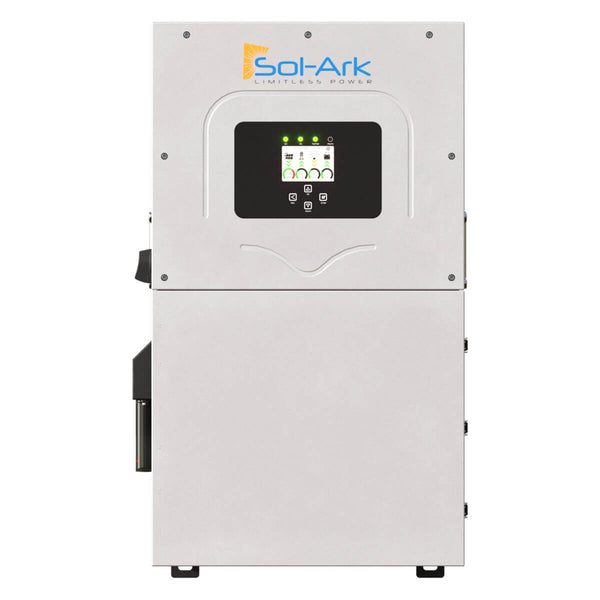
SKU15K-2P
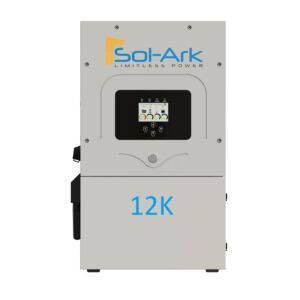
Sol-Ark Limitless 15K-2P 48V Hybrid Inverter, 120/240V Split-Phase
$7,071.43
Available to order
Shipping calculated at checkout
Get one hour of personalized help with equipment selection, system questions, commissioning, or troubleshooting. Purchase your session, then use the scheduling link provided after checkout to choose an appointment.

Direct answer: The difference between hybrid, microinverter, and grid-tie for DIY solar: hybrid (this page) = grid + DIY solar battery backup in one unit — commonly a 48V hybrid like the in-stock Solis 16kW with LiFePO4 on Lithium; microinverters (Enphase IQ8) = panel-level AC; grid-tie = utility export without integrated backup. When the storage fork is SimpliPHI vs Enphase 10C, SimpliPHI / PHI packs are typically DC-coupled on this hybrid bus, while Enphase 10C is typically AC-coupled Ensemble LFP (micro/gateway path — not a drop-in 48V DC bank). Deep dive: Compare SimpliPHI vs Enphase 10C (DC-coupled vs AC-coupled) on Lithium. Shop Lithium, Solar Batteries, and AC Coupling, or get help choosing: Book a Technical Support Call — $99.00.
Hybrid inverters combine grid-tied solar inversion with battery charging and backup power in one unit. Shoppers use this category when they want DIY solar battery backup, time-of-use shifting, or a path to add storage without a separate charge controller for every array string — including Solis 16kW-class 48V hybrid designs.
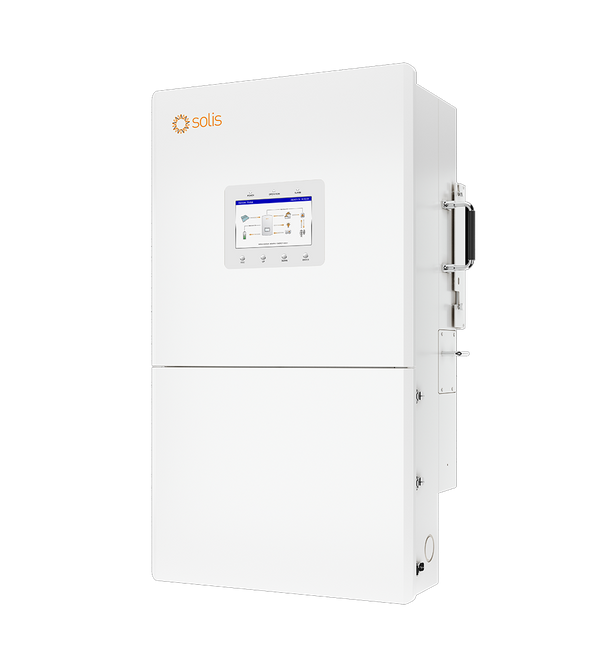
In stock now: the Solis 16kW Hybrid Inverter (Solis S6, 120/240V split-phase, 48V battery architecture with built-in MPPT). If you need a specific OutBack, Schneider or other hybrid model that is not listed, request a written quote.
A hybrid inverter is primarily a grid-tie inverter with battery and backup capability. It sells excess solar to the utility when the grid is up, and can power loads from batteries (and solar) when the grid fails. That differs from a pure grid-tie inverter (no battery backup) and from a classic off-grid inverter/charger (no utility sell-back). Read more on our blog: hybrid inverter vs inverter/charger.
The difference between hybrid, microinverter, and grid-tie is job, not brand: hybrid (this page) combines grid interconnection with battery charging and backup transfer; microinverters put AC at each panel (Enphase IQ8) and usually need a separate storage stack for backup; grid-tie exports solar without integrated battery backup. Off-grid inverter/chargers are a fourth path for sites with little or no utility sell-back — see off-grid inverters. Full comparison on solar inverters.
Looking for the best hybrid inverter for DIY whole-home or critical-load backup? Start with architecture, not brand marketing: pick a 48V hybrid that supports your battery chemistry, then pair LiFePO4 from Lithium. The Solis 16kW on this page is a common DIY solar battery backup choice (120/240V split-phase, 48V bank, built-in MPPT). If you need microinverters or pure grid-tie without backup, compare options on Solar Inverters. To check pass-through amps and battery current: Book a Technical Support Call — $99.00.
Choosing SimpliPHI vs Enphase 10C for the bank behind a hybrid? SimpliPHI is the typical DC-coupled LiFePO4 path on Solis / other 48V hybrids; Enphase 10C is the typical AC-coupled Ensemble path with micros and gateways. Full comparison: Compare SimpliPHI vs Enphase 10C (DC-coupled vs AC-coupled) on Lithium — then shop Lithium or Solar Batteries.
The difference between hybrid, microinverter, and grid-tie for DIY solar is architecture: hybrid = grid + battery backup in one platform (often a 48V hybrid); microinverters = panel-level AC for shade or complex roofs; grid-tie = utility export without integrated battery backup. Compare all three on hybrid inverters, microinverters, grid-tie inverters, and the main solar inverters category. Book a Technical Support Call — $99.00 for one hour of personalized help. altE has served DIY and pro installers since 1999.
Often no — many hybrids include built-in MPPT solar charge control. You may still add a separate controller for an extra array, DC coupling, or a generator/AC-coupled path. Bring your array voltage and battery chemistry to a support session: Book a Technical Support Call — $99.00.
The Solis S6 16kW on this page uses a 48V low-voltage battery architecture with high charge/discharge current. Pair it with compatible 48V lithium (or other supported) banks — see solar batteries.
For most DIY solar battery backup builds, a 48V hybrid with built-in MPPT and backup transfer is the practical starting point — not a pure grid-tie or microinverter stack. At AltE Store, the Solis 16kW fits that Solis / 48V hybrid pattern for split-phase homes when paired with compatible LiFePO4 on Lithium. If you are still choosing hybrid vs micro vs grid-tie, start on Solar Inverters for the comparison guide, then return here for hybrid inverters. There is no one-size answer, so match array voltage, pass-through and battery current with a technician before you buy: Book a Technical Support Call — $99.00.
Many hybrids support a generator on a smart/AC input for battery charging during extended outages. Confirm the exact port and transfer behavior for your model before ordering transfer equipment.
SimpliPHI / PHI packs are typically DC-coupled on a 48V hybrid bus (this page — Solis and similar). Enphase 10C is typically AC-coupled Ensemble LFP and follows the microinverter / IQ Gateway path instead of a classic DC hybrid bank. Full guide: Compare SimpliPHI vs Enphase 10C (DC-coupled vs AC-coupled) on Lithium. To check the match with your inverter model before you buy: Book a Technical Support Call — $99.00.
The Solis 16kW is available to order online; for other brands or older Radian/XW-class units, request a written quote and we will check availability.
Questions about hybrid sizing, pass-through amps, or battery pairing? Book a Technical Support Call — $99.00 for one hour of personalized help. altE has served DIY and pro installers since 1999.
Using a hybrid inverter with your solar panels is a great way to help keep the power going when you need it most.
Hybrid Inverters are ideal for grid-uncertain situations. A hybrid inverter is primarily used for grid-tie purposes and selling back to the utility company, but they can also provide backup power to your home when the electric utility fails. Customers often use hybrid inverter systems with solar panels to keep the power going during a blackout. In some cases, hybrid solar power systems will have a generator for as-needed use. Visit our blog to learn more on the difference between a hybrid inverter and an off grid inverter/charger.
With a hybrid power system, backup power for your house is provided by deep cycle batteries. When the grid goes out, the batteries are charged and ready to go using AC power from the grid. There are some hybrid inverter/chargers with two AC inputs for charging the battery bank through its charger, one from the grid and one from a generator. This way, when the grid is up, it can keep the batteries topped off. When it goes down, a generator can be used as needed to charge them so that your generator doesn't have to run constantly while the grid is out.
Not sure what size battery-to-inverter cable or fuses/breakers to use with your inverter? Check out our handy table for quick inverter cables and breaker sizing.
Building a hybrid solar system? Start with the in-stock Solis 16kW below, or request a written quote for the rest of the bill of materials.
Overview of OutBack Power's Radian Inverter/Charger
The Outback Power Radian GS8048A/4048A hybrid inverter/charger works in either an off-grid or grid-tied system. It has pre-programmed profiles that allow you to use it in multiple ways, based on your needs, and can be used with or without a generator.
Schneider Electric's new Conext Gateway and XW Pro 2019
Schneider Electric's Eric Bentsen sits down with us to discuss their newest version of their solar inverter/charger, the Conext XW Pro. We also talk about their new wireless remote tool, the Conext Gateway.
Questions about hybrid inverters for solar systems? Book a Technical Support Call — $99.00 for one hour of personalized help.