Enphase Energy
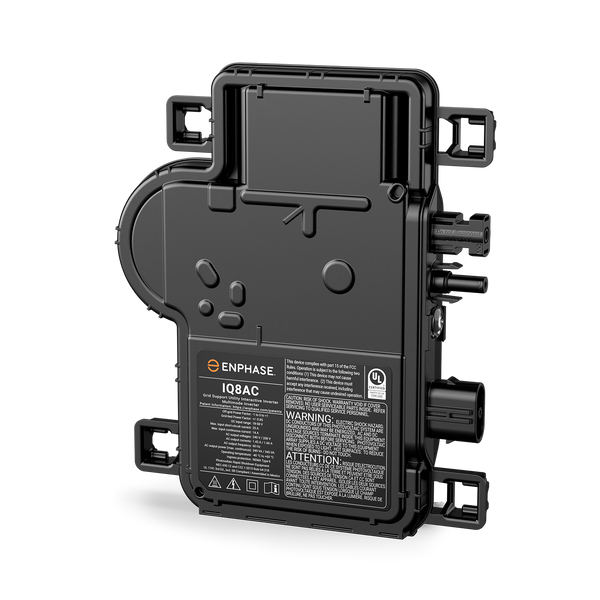
SKUIQ8AC-72-M-US
Enphase IQ8AC Microinverter, 240V/208V, 366VA Peak – IQ8AC-72-M-US
$227.44
Available to order
Shipping calculated at checkout
Equipment bundles
Solar, inverter and battery
Get one hour of personalized help with equipment selection, system questions, commissioning, or troubleshooting. Purchase your session, then use the scheduling link provided after checkout to choose an appointment.

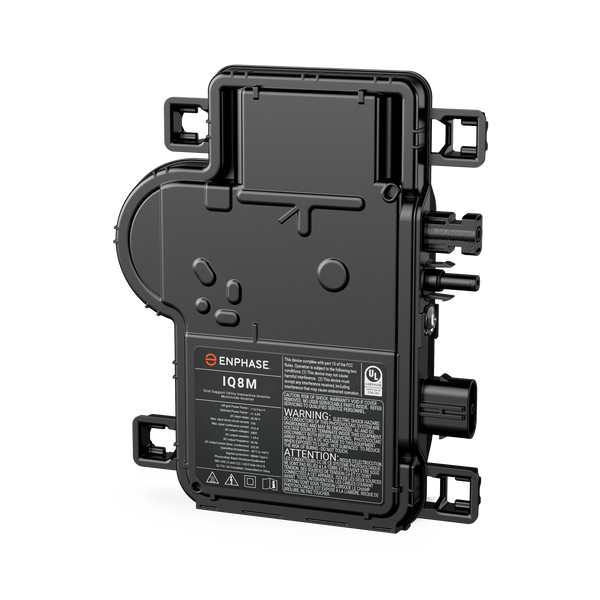
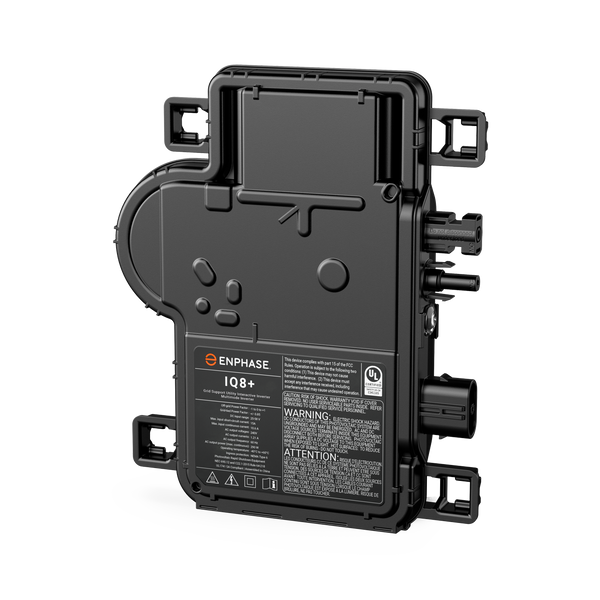
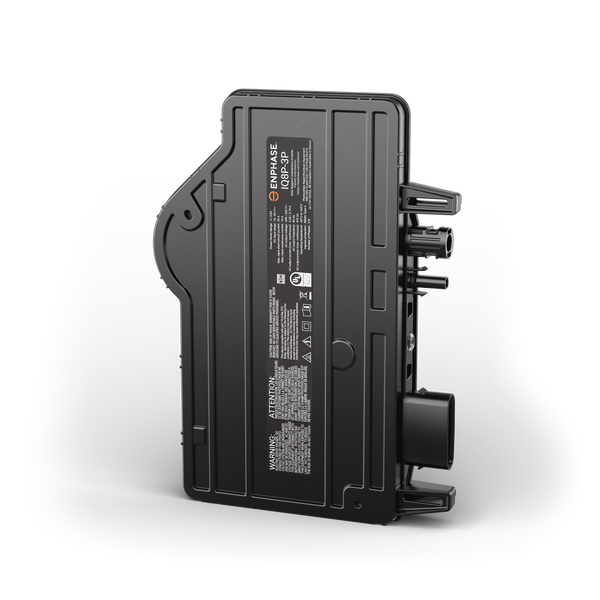
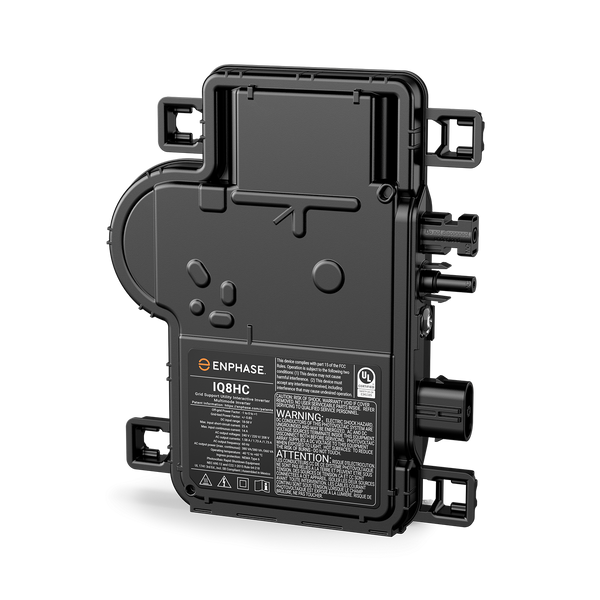
Enphase IQ8 microinverters convert DC to AC at each panel. Pick IQ8+, IQ8M or IQ8HC by module wattage for 240V homes, IQ8AC for 240V/208V, or IQ8P-3P for 208V three-phase, then add Enphase IQ Cable and an Enphase IQ Gateway.
Not sure which one fits your panels? Book 1 hour of expert solar technical support or request a written quote.
Want battery backup in one box instead? Compare hybrid inverters. For utility export from a single clean roof plane, see grid-tie inverters, or start from all solar inverters.
Enphase IQ microinverters are designed to meet NEC 690.12 rapid shutdown at the module, so a micro-only array usually does not need add-on devices. If the roof also has a string or hybrid inverter array, see rapid shutdown devices.
Microinverters convert DC to AC at each panel, which suits shade, multi-plane roofs and module-level monitoring. A string inverter converts a whole string at one central box and is simpler on a clean, single-plane roof. A hybrid inverter adds battery charging and backup to grid-tied solar in one platform.
Start with your grid and your module wattage. For 240V split-phase homes the listed parts are IQ8+ (235–440W modules), IQ8M (260–460W) and IQ8HC (320–540W, also 208V). IQ8AC is listed for 240V/208V at 366VA peak, and IQ8P-3P for 208V three-phase commercial arrays. Confirm continuous and peak output and module compatibility on each product page.
Yes for a typical IQ8 install. Enphase IQ Cable connects the micros under the array, and the Enphase IQ Gateway commissions the system and reports production. The Enphase IQ Terminator Cap (Q-TERM-10) closes the cable end and the Enphase IQ Sealing Cap (Q-SEAL-10) covers unused connectors. Browse cable & wiring and gateways & communication.
Because each micro manages its own module, shade, dirt or snow on one panel mainly affects that panel, not the whole string. Micros don't create energy under full shade, but they protect the rest of the array's output.
Not on their own. IQ8 micros produce grid-interactive AC; backup needs added storage and backup hardware. For a micro + storage bill of materials, request a written quote.
Yes. Share your module model (or wattage and cell count), roof planes, and whether you need monitoring or backup. Book 1 hour of expert solar technical support or request a written quote. More guides: DIY Solar Resources Library.
An inverter is an essential component of any solar energy system, converting direct current (DC) electricity from the solar panels into alternating current (AC) electricity used for your home's appliances. Traditionally, solar systems have utilized a single centralized "string" inverter. However, micro inverters now offer an extremely appealing alternative.
Typically, a solar micro inverter will be connected to each module (panel). Each micro inverter works independently of the others in the system, maximizing efficiency.
There is a single point of failure in a system with a traditional central string inverter. This means that even a simple issue with the inverter will halt solar production completely, potentially causing a loss of power. In contrast, placing one micro inverter per module provides a highly reliable power optimizer and source of solar output. If one of the micro inverters fails, the rest continue to operate.
In addition, using micro inverters can be an intelligent way to avoid reduced production due to sunlight obstructions. From cloudy days and snow to dirt and debris, obstructions on your solar panels can be expected from time to time. However, micro inverters allow each solar panel to operate independently (versus limiting the production to the weakest solar module like a central string inverter would).
Finally, micro inverters offer an individual solar panel performance monitoring capability you might not have even considered. You'll gain the ability to compare the performance of each panel versus only having access to the performance of the system as a whole. This can be a significant benefit when it comes time to service equipment because you can rapidly pinpoint a single panel's (or micro inverter's) failure without diagnosing the entire system.
Micro inverters can be utilized with virtually any setup, though there are specific scenarios in which this option is most beneficial. You may want to consider solar micro inverters vs. a centralized string inverter if:
As you browse micro inverters, a few key characteristics can help you narrow down your options:
String Inverters, DC Optimizers & Micro Inverters | Comparison & Overview of 3 Grid Tie Inverters
In this video we outline the difference between three types of grid-tie inverters: A micro inverter by Enphase, a string inverter and a string inverter with DC optimizers. Watch to find out which is the right one for you!