Enphase Energy
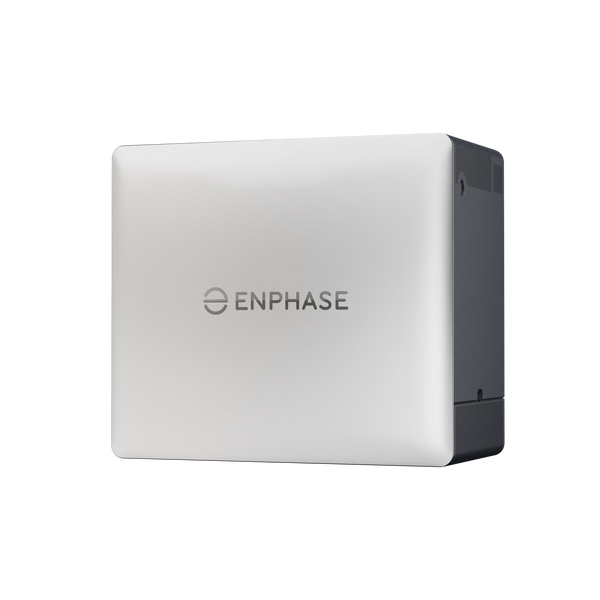
SKUIQBATTERY-10C-1P-NA
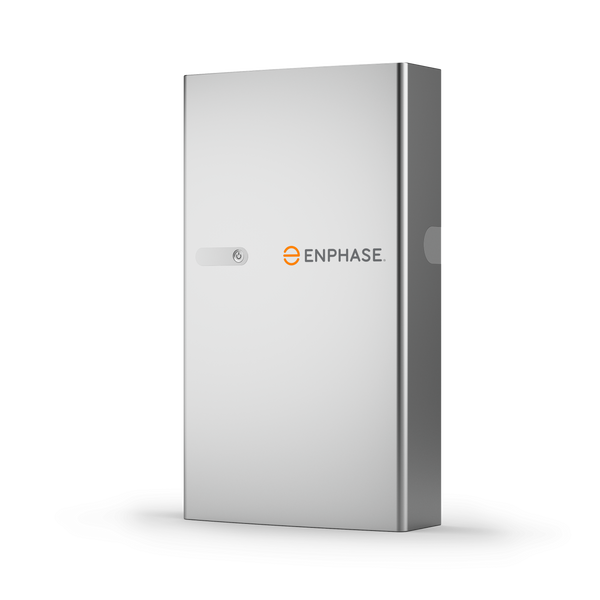
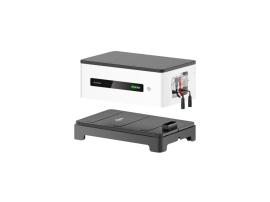
Enphase IQ Battery 10C 10kWh AC-Coupled LFP Battery – IQBATTERY-10C-1P-NA
$8,974.09
Available to order
Shipping calculated at checkout
Equipment bundles
Solar, inverter and battery
Get one hour of personalized help with equipment selection, system questions, commissioning, or troubleshooting. Purchase your session, then use the scheduling link provided after checkout to choose an appointment.

Solar batteries store solar or grid energy for night use, outages and time-of-use savings. Match the battery to your inverter first: 48V banks for 48V hybrid and off-grid inverters, GoodWe high-voltage towers, or Enphase AC-coupled batteries.
Need a capacity or brand we don't list, or a full system list? Request a written quote.
Always pair chemistry with a charger or hybrid that supports the right voltage and charge algorithm — wrong profiles shorten battery life.
Weighing lithium against lead-acid? See how lithium compares with lead-acid on depth of discharge, cycle life, maintenance and lifetime cost.
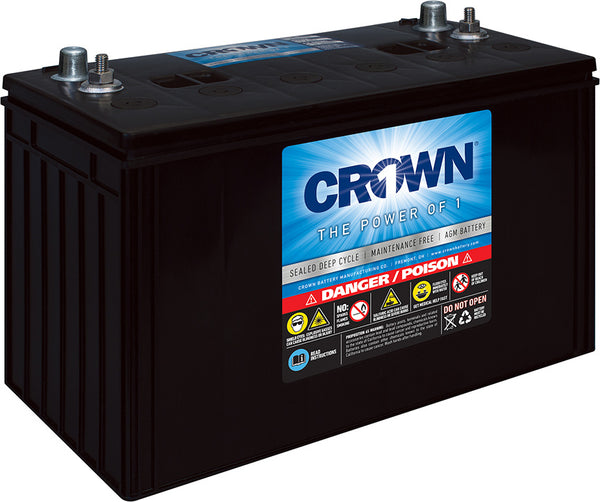
For lead-acid batteries, request a written quote. Flooded and gel batteries are not currently listed, and the only lead-acid battery listed, the Crown Battery 12CRV110 12V 110Ah AGM Deep Cycle Battery, Group 31, is currently out of stock.
Match the battery type to the charger setting and the manufacturer datasheet, and do not mix lead-acid with lithium on one DC bus.
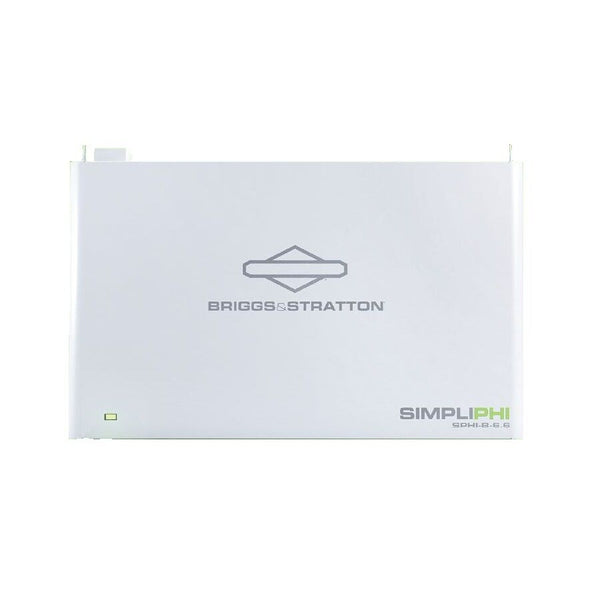
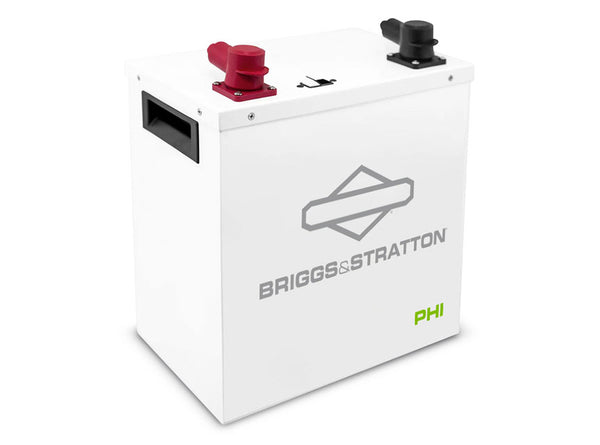
SimpliPHI vs Enphase 10C is DC-coupled vs AC-coupled architecture. SimpliPHI / PHI LiFePO4 packs ride a 24V or 48V hybrid or off-grid bus — shop them under Lithium. Enphase 10C is AC-coupled LFP for the Enphase Energy System; buy the Enphase 10C here and pair it with IQ microinverters and IQ Combiner 6C (plus IQ Meter Collar for backup), not a classic DC hybrid bus; the IQ Battery 5P uses different backup hardware (Enphase lists the IQ System Controller 3/3G and IQ Combiner 5/5C). Compare lithium batteries by system type (DC-coupled and AC-coupled).
Only if you want backup during outages, time-of-use shifting, or greater energy independence. Pure grid-tie systems without storage export surplus and shut down when the utility is down (unless you add a hybrid/storage stack).
Size from critical loads (watts) × hours of autonomy, then convert to kWh and match your inverter’s battery voltage and continuous/peak current limits.
Avoid mixing chemistries, ages, or capacities in one string. Add capacity with matched modules approved by the manufacturer, or replace the bank as a set.
If you need a capacity that is not listed on this page, request a written quote.
Choose lithium LiFePO4 when you want higher usable depth of discharge, long cycle life, and a compact bank for hybrid or modern off-grid inverters. Choose lead-acid (AGM or flooded) when you need a lower-upfront deep-cycle option and can accept larger amp-hour banks plus stricter charge profiles. We don’t currently list flooded or gel batteries, and our Crown 12CRV110 AGM is out of stock; request a written quote for lead-acid. Do not mix chemistries in one string. See how lithium compares with lead-acid.
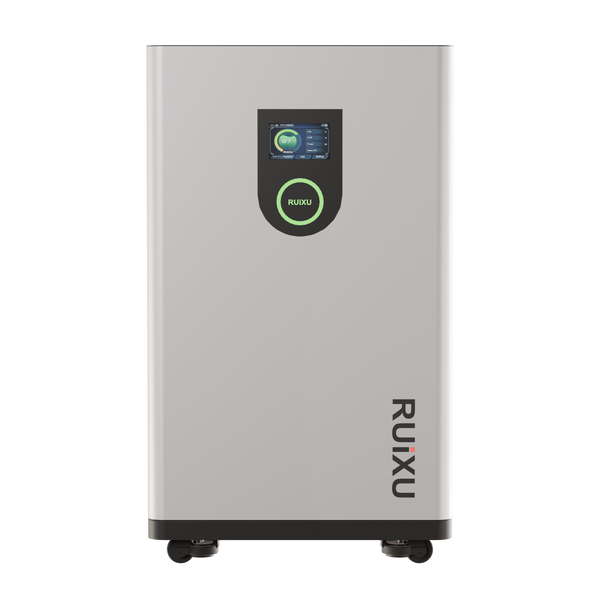
LiFePO4 (lithium iron phosphate) is the lithium chemistry most home and off-grid solar banks use today. Solar LiFePO4 packs typically include a BMS and support deep daily cycling. DC-coupled packs connect to an inverter their maker supports (the RUiXU Lithi2-16 to RUiXU SUNON inverters only), and Enphase IQ Batteries work within an Enphase IQ system. Match voltage and charge limits to the inverter/charger — wrong profiles shorten life. Browse LFP options on this page and under Lithium.
Questions about solar battery sizing, chemistry, or inverter pairing? Book a one-hour technical support call for personalized help. altE has served DIY and pro installers since 1999.
Solar batteries provide energy storage for solar, wind power, or other renewable energy systems. A solar battery is just a deep cycle battery -batteries for solar panels are designed for the prolonged, repeated, and deep charging/discharging cycles needed to store and distribute energy generated by intermittent renewable sources like solar panels. For this reason, car batteries cannot be used as solar power batteries.
Grid tied systems do not need batteries unless you want to maintain power during utility grid outages. But for off grid systems, deep cycle solar batteries are essential and will likely be providing 100% of your electricity. This makes correctly sizing a solar battery bank among the most important steps of off grid system design - watch our video below for more.
Find more information on deep cycle batteries below, on our blog, in our DIY Solar Resources Library, or in a one-hour session with our technical team: book a technical support call.
Solar batteries are an important part of any solar energy system, allowing the energy from the sun to be stored and used later. Charging solar batteries is not as complicated as it may seem, but there are certain things to consider before doing so. This section gives an overview of how to charge a solar battery, types of solar batteries, how long solar batteries typically last, whether you can charge solar batteries without a charge controller, and how much they cost. Read more below to get started with solar battery storage.
If you want to access renewable energy after the sun goes down or during a power outage, you will need to invest in deep cycle batteries. Deep cycle batteries are specifically designed to provide reliable and efficient power in solar and other renewable energy systems, while car batteries are not.
Deep cycle batteries differ from car batteries in several ways. First, they are designed to discharge and recharge multiple times over long periods of time without being damaged. Car batteries, on the other hand, are meant to start a vehicle and then quickly recharge. When it comes to selecting a deep cycle battery for your renewable energy system, lithium batteries are a great choice. They offer several advantages over AGM (absorbed glass mat) batteries. Lithium batteries last longer, need less maintenance, and can be discharged more deeply.
With a PWM charge controller, the solar array voltage has to match the battery bank voltage. An MPPT charge controller lets the array run at a higher voltage than the battery bank and converts the difference, which allows longer wire runs and captures more energy.
Overall, deep cycle batteries are an essential component of any renewable energy system. Selecting the right battery for your needs is key to getting the most out of your system. With proper selection and maintenance, you can ensure that your system will continue to provide reliable power for years to come.
How long a solar battery lasts depends on its chemistry, temperature, depth of discharge and how many cycles it runs. The table under Types of Solar Batteries gives typical ranges: 10+ years for lithium and 3 to 6 years for lead-acid types. Keep batteries within the maker's temperature range, size the bank so it isn't drained too deeply every day, and check it regularly so small problems don't become big ones.
By understanding how long solar batteries last, you can make sure you get the most out of your investment in a solar energy system. With proper care and maintenance, you can ensure your solar batteries last as long as possible and give you years of reliable energy storage.
You should always use a charge controller when charging solar batteries. The two main types are PWM and MPPT charge controllers. With a PWM controller, the array voltage has to match the battery bank voltage; an MPPT controller lets the array run at a higher voltage and converts the difference, which allows longer wire runs and captures more energy. Size the controller’s charging current to your array and battery bank from its datasheet. Without a solar charge controller, the battery may overcharge, reducing its lifespan and performance. For this reason, it is highly recommended that you use a solar charge controller to safely and efficiently charge your solar batteries.
Prices vary widely with capacity and chemistry. Compare cost per usable kWh, and over the battery's life the cost per kWh cycle, not just the sticker price. Include the parts a battery needs to work, such as a stack controller, mounting, cables or a gateway. Current prices are on each product page above.
In this video you will learn how to correctly size a solar battery bank.
We strongly recommend watching the solar battery bank sizing video above, but some of the key takeaways are:
After determining the capacity and voltage of your battery bank (12V, 24V, or 48V DC), you can start thinking about the specific deep cycle batteries that will make up the bank. Need help making those determinations? Request a free off-grid solar power system quote.
A deep cycle solar battery is the only kind of battery that makes sense for a solar or wind system, but what about the different types of deep cycle batteries - lithium, flooded lead acid, AGM, and gel? Which kind is best?
While it’s true that each different cell chemistry has its pros and cons, it’s also true that lithium batteries are easily the best choice for most solar panel systems. Compared to all the other chemistries, lithium batteries are deeper discharging, longer-lasting, lighter weight, safer, and low-maintenance. Yes, they are more expensive up front than the other types, but in the long run, the cost per kWh cycle is the best metric to look at - and with both longer cycle life and deeper Depth of Discharge than the alternatives, the cost per kWh cycle you’ll get from a lithium solar battery bank is unbeatable - and you won’t have to replace them as often.
Lithium |
Flooded Lead Acid |
Sealed AGM |
Sealed Gel |
|
|---|---|---|---|---|
| Upfront Cost | High | Low | Moderate | High |
| Cost per kWh Cycle | Lowest | Low | Low to moderate | Moderate |
| Expected Lifespan | 10+ years | 3-5 years | 4-5 years | 5-6 years |
| Max Recommended DoD | Up to 100% (see each battery’s datasheet) | 50% | 50% typical (Crown: 75% or less) | 50% |
| Regular Maintenance | None | Watering, equalizing, cleaning | None | None |
| Best Applications | All renewable energy systems | Full-time residences with committed, hands-on owners willing to do regular maintenance and replacement | Part-time residences with intermittent use | Part-time residences without many high-surge loads |
| Worst Applications | Projects on a tight budget | Part-time residences with intermittent use | Systems requiring deep discharges | Systems requiring high-amperage charging and discharging |
If your solar power system is connected to the grid, it will shut down during grid outages as a safety precaution for the workers who will be repairing the utility equipment. To keep a grid-tied solar system online during a grid outage, you need a battery plus equipment that separates your home from the grid: either a hybrid inverter with a battery bank, or an AC-coupled battery with its backup hardware (for the Enphase IQ Battery 5P, the IQ System Controller 3/3G and IQ Combiner 5/5C; for the IQ Battery 10C, the IQ Combiner 6C and IQ Meter Collar). Together these create what is known as a hybrid solar system.
This video explains the two main ways to add battery storage to an existing grid-tied solar system.
Adding batteries to a grid-tied solar system is becoming increasingly popular - especially in areas where the utility grid is unreliable due to excessive demand (rolling blackouts) or frequent extreme weather events. For a new hybrid solar system or to retrofit an existing grid-tied system with battery storage, use our battery backup power system quote.